On walking into a decision already made.
We'd been working on the project for months. The argument we were making was that the HMI, the screens, the interactions, the whole interface layer, was where user value actually lived. Not in the metal. In the experience of using the thing.
The Saab design team got it immediately. They gave us something rare: permission to mean something. So we went all in. Storyboards, prototypes, a custom typeface pitch to signal premium and create brand consistency throughout. At some point I got genuinely moved by a typeface we hadn't even built yet.
That tells you where my head was.
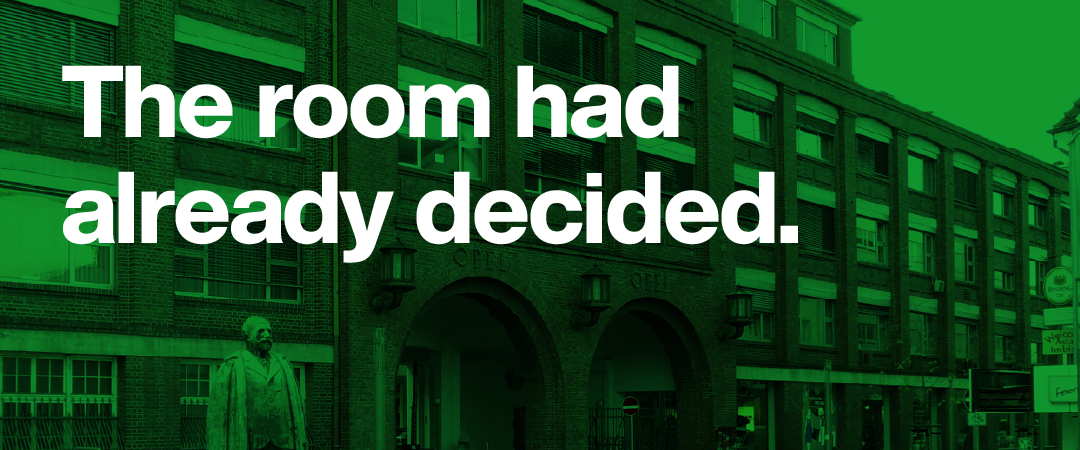
The presentation was at Opel headquarters in Rüsselsheim, General Motors' European base. By that point in the project I'd been there enough times that it felt familiar, the corridors, the canteen, the particular quality of the light through the studio windows. I knew the place.
This time was different though. This was the moment we'd been building toward. The chance to show the intent behind the work, not just the work itself. To have someone at that level understand what we were reaching for. We were ready in the way you're ready when you've convinced yourself that being ready is enough.
He arrived with an entourage. The room changed when he walked in, not dramatically, just noticeably. He sat down, folded his hands, and watched.
We presented. Eight minutes in, he stood up.
He thanked us, nodded, and turned toward the door. At the threshold he stopped and turned back. Found me in the room.
"What's your name again?"
"Magnus," I said, suddenly unsure if this was good or very, very bad.
"Right. You said something about delivering value to the user?"
"Yes."
A brief smile. The kind that's seen something before.
"If you want to add value to a car, you add chrome."
And he was gone.
I looked around the room. Nobody laughed. I almost did, which probably says something about my relationship with awkward silences.
What stayed with me wasn't the dismissal. It was the precision of it. He wasn't being difficult or performing authority. He was telling the truth about how value worked inside that organisation, what it looked like, what it weighed, what you could hold in your hand. The decision about our work wasn't made in that room. It had been made years earlier, in the accumulated choices about what design was for.
That's what I want to explore here. Because that room wasn't unusual. Most organisations have a version of it. And most of the people sitting in it don't know they're in it.
Identity
The Saab team felt the chrome line differently than we did. We were disappointed. They'd been here before.
Identity is the deepest of the four forces because it operates below the level of argument. It isn't a policy or a principle. It's the accumulated sense of what we are and therefore what we do. In Rüsselsheim, the identity of the parent organisation had been built around physical craft, engineering precision, materials you could touch and measure. That identity wasn't wrong. It had built a company over more than a century.
But Saab's identity was different. It carried a different logic, a different sense of what made a car worth making. And when those two identities met in a review room, only one of them had the authority to define what counted.
The question worth asking in your own organisation is not whether you have a strong identity. You almost certainly do. The question is whether your identity has already decided which kinds of change it will allow. Transformation that aligns with existing identity moves easily. Transformation that challenges it tends to get translated into something more familiar, or quietly set aside.
Most organisations discover this after the fact.
Language
Chrome had a definition everyone agreed on. Experience was still an argument.
Language in organisations is not neutral. The words that have been in the room for a long time carry weight that newer words haven't earned yet. They have budget lines, performance metrics, and historical precedent behind them. When new ideas arrive carrying new vocabulary, they have to compete with that accumulated authority.
In our case, words like user value, experience design, and emotional resonance were still making their case. Chrome, materials, cost per unit: these had nothing to prove. The conversation was unequal before it started.
This is worth watching in your own organisation. Pay attention to which words land without explanation and which ones require a slide to justify. The words that need no justification are the ones that own the room. They're also the ones that define, quietly and without announcement, which ideas are considered serious.
When the language of transformation doesn't match the language of authority, the transformation tends to get rewritten in terms the organisation already understands. Which usually means it becomes something smaller than it was.
Rituals
We rehearsed in the corridors, timed the transitions, made sure the first thirty seconds landed.
What we didn't account for was that a ten-minute review with a senior leader is not a format for reconsidering what value means. It's a format for approving or not approving. We had prepared for a conversation. We were in a verdict.
Organisational rituals carry embedded assumptions about what is supposed to happen inside them. The strategy review assumes the strategy is mostly right. The town hall assumes the news is broadly positive. The design review assumes the brief was sound. These aren't cynical observations. They're structural ones. The ritual was designed for a purpose, and that purpose shapes what's possible inside it.
The organisations I've seen navigate transformation most successfully tend to be the ones that create genuinely different kinds of conversations alongside the standard ones. Not to replace the review or the town hall, but to make room for questions that the existing rituals don't have space for. It's a small distinction and it matters more than most people realise.
Incentives
Nobody in that room was rewarded for saying yes to us.
The senior leader wasn't going to be measured on whether the infotainment experience felt right. He was going to be measured on things with weight, finish, cost per unit. His credibility in that organisation was built on a different kind of judgment than the one we were asking him to make.
This is the force that tends to surprise people, because it operates so close to the surface and still goes unnoticed. Incentives don't just shape behaviour. They shape perception. Over time, people stop seeing value in things that their incentives don't reward. Not through any failure of intelligence or imagination, but because attention follows consequence.
When an organisation says it wants to transform but hasn't changed what it measures and rewards, it is asking people to work against their own interests. Some will, for a while, out of belief or momentum. Most will find their way back to what gets recognised. The transformation satisfies itself long before it succeeds.
What to look for
I'm not suggesting you walk into your next meeting looking for a chrome moment. You probably won't find one that clean. What happened in Rüsselsheim was unusually legible, a single line that made the whole structure visible.
In most organisations it's quieter than that. It's the reframing that happens between one meeting and the next, where a proposal comes back with different language and a narrower scope. It's the idea that gets appreciated in the room and never mentioned again. It's the project that gets approved in principle and starved in practice.
What the four forces have in common is that they work before the formal decision happens. By the time the conversation takes place, identity has already filtered the options, language has already sorted what sounds credible, rituals have already determined what kind of answer is possible, and incentives have already shaped what people are willing to defend.
The chrome line was the end of a process, not the beginning of one.
The reader who starts to see that in their own organisation won't necessarily be able to change it. But they'll stop being surprised by it. And that, in my experience, is where things begin to shift.
Already Decided is about the choices organisations make before they know they're making them. The chrome line was one of them.